

Medicago

Aleuria Aurantia Lectin (AaL) (2 mg)
Medicago AB Products Are Available Worldwide. For Research Use Only. Recombinant Aleuria Aurantia Lectin (AaL) is produced in E.coli and has an amino acid sequence identical to native AaL. AaL is a dimeric lectin with two identical subunits of approximately 36 kDa. Each subunit has five carbohydrate-binding sites.1 The lectin recognizes and binds specifically to fucose and terminal fucose residues on complex oligo saccharides and glycoconjugates. rAaL has binding affinity for fucose in all binding positions (1-2, 1-3, 1-4 and 1-6) and in contrast to AaL purified from natural sources, rAaL is not contaminated with free fucose yielding higher affinity towards fucosylated oligosaccharides than native AaL.2 Recombinant AaL hemagglutinates erythrocytes irrespective of blood type (A, B and 0) at the same titers as AaL isolated from natural sources. 1 Wimmerova M, Mitchell E, Sanchez JF, Gautier C, Imberty A. Crystal structure of fungal lectin: six-bladed beta-propeller fold and novel fucose recognition mode for Aleuria Aurantia Lectin. J Biol Chem. 2003; 278:27059-67. 2 Olausson J, Tibell L, Jonsson BH, Pahlsson P. Detection of a high affinity binding site in recombinant Aleuria Aurantia Lectin. Glycoconj J. 2008; 25:753-62.
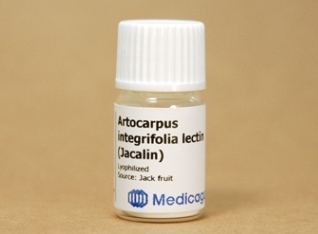
Artocarpus Integrifolia Lectin (Jacalin) (10 mg)
Medicago AB Products Are Available Worldwide. For Research Use Only. Artocarpus Integrifolia Lectin (Jacalin), isolated by affinity chromatography from jackfruit seeds, belongs to the family of galactose-binding lectins. Jacalin is a tetrameric two-chain lectin with a molecular weight of 66 kDa. Applications include isolating IgA from human serum, isolating human plasma glycoproteins and histochemistry. A post-translational proteolytic modification of Jacalin gives the lectin a novel carbohydrate-binding site involving the N terminus of the -chain. The relative affinities of the lectin for galactose derivatives, as well as the structural basis of its T-antigen specificity, are explained by its protein structure. Jacalin is supplied without preservatives as a lyophilized white to light-yellow powder, essentially salt-free. For laboratory use only.
Artocarpus Integrifiolia Lectin (Jacalin) (100 mg)
Medicago AB Products Are Available Worldwide. For Research Use Only. Artocarpus integrifolia lectin (Jacalin), isolated by affinity chromatography from jackfruit seeds, belongs to the family of galactose-binding lectins. Jacalin is a tetrameric two-chain lectin with a molecular weight of 66 kDa. Applications include isolating IgA from human serum, isolating human plasma glycoproteins and histochemistry. A post-translational proteolytic modification of Jacalin gives the lectin a novel carbohydrate-binding site involving the N terminus of the -chain. The relative affinities of the lectin for galactose derivatives, as well as the structural basis of its T-antigen specificity, are explained by its protein structure. Jacalin is supplied without preservatives as a lyophilized white to light-yellow powder, essentially salt-free. For laboratory use only.
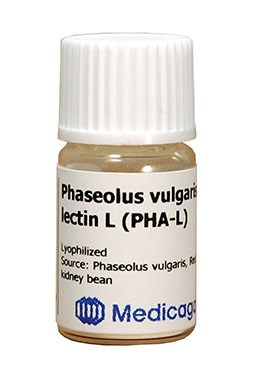
Phaseolus Vulgaris Lectin L (PHA-L) (2 mg)
Medicago AB Products Are Available Worldwide. For Research Use Only. Phaseolus Vulgaris Lectin L (PHA-L) is composed of four units each of molecular weight of 31 kDa. The protein has a molecular weight of 126 kDa. It is isolated from red kidney beans by affinity chromatography. Also known as Leucoagglutinin (PHA-L), this lectin has high mitogenic and leucoagglutinating activity, but low erythroagglutinating activity. The lectin recognizes terminal galactose residues of complex glycans on mammalian glycoproteins such as thyroglobulin. PHA-L does not agglutinate human erythrocytes at concentrations of 250 g/mL or less, and is non-specific for blood groups. Phaseolus vulgaris lectin is supplied as a white lyophilized powder from 10 mM NH4HCO3. For laboratory use only.
Phaseolus Vulgaris Lectin L (PHA-L) (10 mg)
Medicago AB Products Are Available Worldwide. For Research Use Only. Phaseolus Vulgaris Lectin L (PHA-L) is composed of four units each of molecular weight of 31 kDa. The protein has a molecular weight of 126 kDa. It is isolated from red kidney beans by affinity chromatography. Also known as Leucoagglutinin (PHA-L), this lectin has high mitogenic and leucoagglutinating activity, but low erythroagglutinating activity. The lectin recognizes terminal galactose residues of complex glycans on mammalian glycoproteins such as thyroglobulin. PHA-L does not agglutinate human erythrocytes at concentrations of 250 g/mL or less, and is non-specific for blood groups. Phaseolus vulgaris lectin is supplied as a white lyophilized powder from 10 mM NH4HCO3. For laboratory use only.
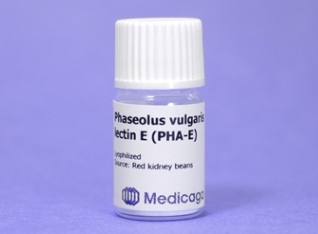
Phaseolus Vulgaris Lectin E (PHA-E) (5 mg)
Medicago AB Products Are Available Worldwide. For Research Use Only. Phaseolus Vulgaris Lectin E (PHA-E) is a tetrameric protein with a molecular weight of 128 kDa. It is isolated from red kidney beans by affinity chromatography and ion-exchange chromatography. The lectin recognizes terminal galactose residues of complex glycans on mammalian glycoproteins. Because it has high erythrocyte agglutinating activity, it is also known as Erythroagglutinin (PHA-E). PHA-E is not blood group specific. Less than 5 g/ml will agglutinate human erythrocytes type O. PHA-E is supplied as a white to light-pink lyophilized powder from 50 mM NH4HCO3. For laboratory use only.
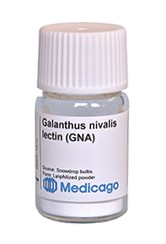
Galanthus Nivalis Lectin (GNA) (5 mg)
Medicago AB Products Are Available Worldwide. For Research Use Only. Galanthus Nivalis Lectin (GNA) is isolated from snowdrop bulbs and has a molecular weight of 52 kDa. The lectin contains little or no carbohydrate and does not need Ca2+ or Mn2+ for binding, since unlike most mannose-specific lectins it is not a metalloprotein. Structures containing (-1,3) mannose residues are preferred for binding. Unlike the majority of mannose-binding lectins, GNA does not bind alpha-linked glucose. GNA is supplied without preservatives as a lyophilized powder. Larger quantities are available on request. For laboratory use only.
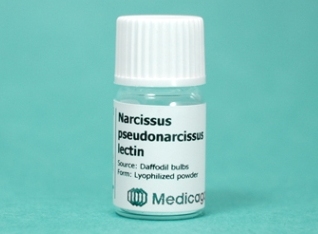
Narcissus Pseudonarcissus Lectin (NPA/NPL) (50 mg)
Medicago AB Products Are Available Worldwide. For Research Use Only. Narcissus pseudonarcissus lectin (NPL) is isolated from daffodils. It exists as a dimeric protein (molecular weight 26 kDa) composed of two subunits of 13 kDa each. NPL dissociates into its monomers below pH 5.0 and above pH 9.0. NPL is mitogenic for human lymphocytes. Specificity for blood group: non-reactive with human erythrocytes. Narcissus pseudonarcissus lectin is supplied as a white lyophilized powder in 10 mM CH3COONH4. For laboratory use only.
Narcissus Pseudonarcissus Lectin (NPA/NPL) (10 mg)
Medicago AB Products Are Available Worldwide. For Research Use Only. Narcissus pseudonarcissus lectin (NPL) is isolated from daffodils. It exists as a dimeric protein (molecular weight 26 kDa) composed of two subunits of 13 kDa each. NPL dissociates into its monomers below pH 5.0 and above pH 9.0. NPL is mitogenic for human lymphocytes. Specificity for blood group: non-reactive with human erythrocytes. Narcissus pseudonarcissus lectin is supplied as a white lyophilized powder in 10 mM CH3COONH4. For laboratory use only.
Phaseolus Vulgaris Lectin M (PHA-M), Crude (25 mg)
Medicago AB Products Are Available Worldwide. For Research Use Only. Phaseolus Vulgaris Lectin M (PHA-M) is the mucoprotein variant of phytohemaglutinin isolated from red kidney bean. It contains up to 20% carbohydratesin conjugation with the protein which presents two bands corresponding to about 35 kDa according to SDS-PAGE in presence of mercaptoethanol. It is a potent mitogen used to stimulate cell proliferation in lymphocyte cultures and also has a powerful erythroagglutinating activity.
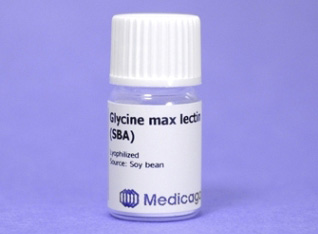
Glycine Max Lectin (SBA) (50 mg)
Medicago AB Products Are Available Worldwide. For Research Use Only. Glycine max lectin SBA (Soy bean agglutinin) is isolated from soy bean by affinity chromatography. The protein has 4 subunits and a molecular weight of 120 kDa. SBA is not blood group specific. It displays carbohydrate binding specifity for N-acetyl-D-galactosamine and galactopyranosyl residues of glycoproteins. The lectin interacts better with neuramidase-treated cells than with untreated cells. It possesses selective affinity for lymphocytes and human CD34+ hematopoietic stem cells. Immobilized conjugates of SBA are therefore important tools for removing T-cells in bone marrow transplantation. Glycine max lectin is supplied without preservatives as a white to cream-coloured lyophilized powder from 50 mM NH4HCO3, 10 M CaCl2. For laboratory use only.
Glycine Max Lectin (SBA) (10 mg)
Medicago AB Products Are Available Worldwide. For Research Use Only. Glycine max lectin SBA (Soy bean agglutinin) is isolated from soy bean by affinity chromatography. The protein has 4 subunits and a molecular weight of 120 kDa. SBA is not blood group specific. It displays carbohydrate binding specifity for N-acetyl-D-galactosamine and galactopyranosyl residues of glycoproteins. The lectin interacts better with neuramidase-treated cells than with untreated cells. It possesses selective affinity for lymphocytes and human CD34+ hematopoietic stem cells. Immobilized conjugates of SBA are therefore important tools for removing T-cells in bone marrow transplantation. Glycine max lectin is supplied without preservatives as a white to cream-coloured lyophilized powder from 50 mM NH4HCO3, 10 M CaCl2. For laboratory use only.
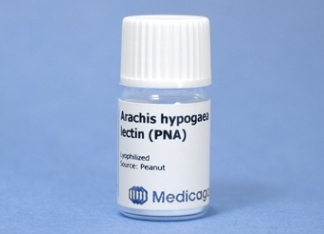
Arachis Hypogaea Lectin (PNA) (50 mg)
Medicago AB Products Are Available Worldwide. For Research Use Only. Arachis hypogaea lectin (PNA, Peanut Agglutinin) is isolated from peanuts by affinity chromatography. The lectin has 4 sub-units and a molecular weight of 110 kDa. PNA is a carbohydrate-free protein that displays specificity towards -D-Gal(1-3)-D-galNAc. It has potent anti-T activity and can be used to distinguish between human lymphocyte subsets. PNA has been used in tumour tissue determination for transitional mucosa malignancies. Arachis hypogaea lectin is supplied without preservatives as a lyophilized white to light-yellow powder from 10 mM NH4HCO3. For laboratory use only.
Arachis Hypogaea Lectin (PNA) (10 mg)
Medicago AB Products Are Available Worldwide. For Research Use Only. Arachis hypogaea lectin (PNA, Peanut Agglutinin) is isolated from peanuts by affinity chromatography. The lectin has 4 sub-units and a molecular weight of 110 kDa. PNA is a carbohydrate-free protein that displays specificity towards -D-Gal(1-3)-D-galNAc. It has potent anti-T activity and can be used to distinguish between human lymphocyte subsets. PNA has been used in tumour tissue determination for transitional mucosa malignancies. Arachis hypogaea lectin is supplied without preservatives as a lyophilized white to light-yellow powder from 10 mM NH4HCO3. For laboratory use only.
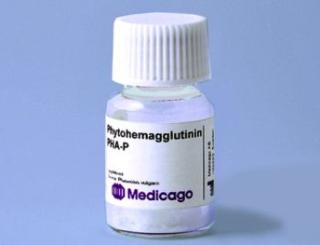
Phaseolus Vulgaris Lectin P (PHA-P) (5 mg)
Medicago AB Products Are Available Worldwide. For Research Use Only. Phaseolus vulgaris lectin P (PHA-P) is isolated from red kidney beans by affinity chromatography. The lectin has a molecular weight of 128 kDa and the purity of the product is decided by SDS electrophoresis. PHA-P is a mixture of isolectins containing L (leuco-agglutinin) and E (erythroagglutinin) subunits. Phaseolus vulgaris lectin is supplied without preservatives as a white to light-pink lyophilized powder. For laboratory use only.
Phaseolus vulgaris lectin P PHA-P (10 mg)
Medicago AB Products Are Available Worldwide. For Research Use Only. Phaseolus vulgaris lectin P (PHA-P) is isolated from red kidney beans by affinity chromatography. The lectin has a molecular weight of 128 kDa and the purity of the product is decided by SDS electrophoresis. PHA-P is a mixture of isolectins containing L (leuco-agglutinin) and E (erythroagglutinin) subunits. Phaseolus vulgaris lectin is supplied without preservatives as a white to light-pink lyophilized powder. For laboratory use only.
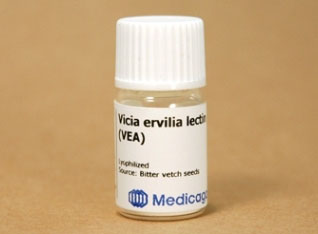
Vicia Ervilia Lectin (VEA) (50 mg)
Medicago AB Products Are Available Worldwide. For Research Use Only. Vicia ervilia lectin (VEA) is isolated from bitter vetch seeds and has a molecular weight of 53 kDa. This lectin is blood group non-specific with sugar specificity for -mannose and to a lesser extent, -glucose residues. Agglutination is inhibited by mannose, glucose, fructose, methyl mannoside, maltose, melezitose and , ‘-trehalose. VEA is supplied without preservatives as a yellow lyophilized powder. For laboratory use only.
Vicia Ervilia Lectin (VEA) (10 mg)
Medicago AB Products Are Available Worldwide. For Research Use Only. Vicia ervilia lectin (VEA) is isolated from bitter vetch seeds and has a molecular weight of 53 kDa. This lectin is blood group non-specific with sugar specificity for -mannose and to a lesser extent, -glucose residues. Agglutination is inhibited by mannose, glucose, fructose, methyl mannoside, maltose, melezitose and , ‘-trehalose. VEA is supplied without preservatives as a yellow lyophilized powder. For laboratory use only.
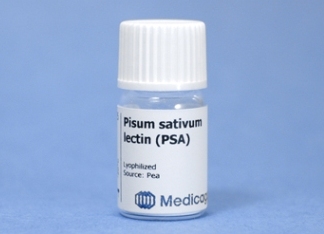
Pisum Sativum Lectin (PSA) (25 mg)
Medicago AB Products Are Available Worldwide. For Research Use Only. Pisum sativum agglutin (PSA) is isolated from peas by affinity chromatography. It has 4 subunits and a molecular weight of 49 kDa. PSA has a carbohydrate binding specificity for -D-mannose and -D-glucose. The lectin agglutinates human erythrocytes without regard to blood type. PSA lectin is a mitogen similar to Concanavalin A. Pisum sativum lectin is supplied without preservatives as a white to cream-coloured lyophilized powder. For laboratory use only.
Pisum Sativum Lectin (PSA) (10 mg)
Medicago AB Products Are Available Worldwide. For Research Use Only. Pisum sativum agglutin (PSA) is isolated from peas by affinity chromatography. It has 4 subunits and a molecular weight of 49 kDa. PSA has a carbohydrate binding specificity for -D-mannose and -D-glucose. The lectin agglutinates human erythrocytes without regard to blood type. PSA lectin is a mitogen similar to Concanavalin A. Pisum sativum lectin is supplied without preservatives as a white to cream-coloured lyophilized powder. For laboratory use only.
Pisum Sativum Lectin (PSA) (100 mg)
Medicago AB Products Are Available Worldwide. For Research Use Only. Pisum sativum agglutin (PSA) is isolated from peas by affinity chromatography. It has 4 subunits and a molecular weight of 49 kDa. PSA has a carbohydrate binding specificity for -D-mannose and -D-glucose. The lectin agglutinates human erythrocytes without regard to blood type. PSA lectin is a mitogen similar to Concanavalin A. Pisum sativum lectin is supplied without preservatives as a white to cream-coloured lyophilized powder. For laboratory use only.
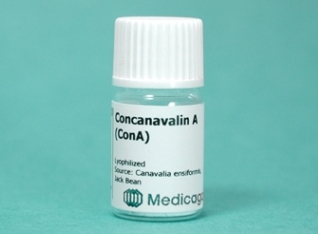
Concanavalin A (Con A) (250 mg)
Medicago AB Products Are Available Worldwide. For Research Use Only. Concanavalin A (Con A) is a lectin isolated from Jack beans (Canavalia ensiformis) by affinity chromatography. It has 4 subunits and a molecular weight of 104 kDa. Con A is the most widely used lectin and has broad applicability. It reacts with non-reducing -D-glucose and -D-mannose. Con A binds specifically to certain structures found in various sugars, glycoproteins and glycolipids. It has been utilized in hormone receptor studies, mitogenic assays and for characterizing normal and malignant cells (cancer cells are readily aggregated by Con A while normal cells are not). Con A can initiate cell division (mitogenesis). Immobilized Con A has been used in affinity chromatography purifications of a wide variety of glycoproteins and cellular structures. Concanavalin A lectin is supplied without preservatives as a lyophilized white powder or flocculate from 0.5 mM MnCl2, 0.5 mM CaCl2. For laboratory use only.
Concanavalin A (Con A) (100 mg)
Medicago AB Products Are Available Worldwide. For Research Use Only. Concanavalin A (Con A) is a lectin isolated from Jack beans (Canavalia ensiformis) by affinity chromatography. It has 4 subunits and a molecular weight of 104 kDa. Con A is the most widely used lectin and has broad applicability. It reacts with non-reducing -D-glucose and -D-mannose. Con A binds specifically to certain structures found in various sugars, glycoproteins and glycolipids. It has been utilized in hormone receptor studies, mitogenic assays and for characterizing normal and malignant cells (cancer cells are readily aggregated by Con A while normal cells are not). Con A can initiate cell division (mitogenesis). Immobilized Con A has been used in affinity chromatography purifications of a wide variety of glycoproteins and cellular structures. Concanavalin A lectin is supplied without preservatives as a lyophilized white powder or flocculate from 0.5 mM MnCl2, 0.5 mM CaCl2. For laboratory use only.

Crotalaria Juncea Lectin (50 mg)
Medicago AB Products Are Available Worldwide. For Research Use Only. Crotalaria Juncea Lectin is isolated from Sunn Hemp seeds by affinity chromatography. It has a molecular weight of 124 kDa and is composed of four identical polypeptide chains of 31 kDa each. The lectin is a glycoprotein that displays specificity toward -galactosides and interacts with serum glycoproteins, cytochrome b5 and virus surface glycoproteins such as BVDV, influenza and bovine diarrhea. Crotalaria Juncea Lectin is supplied without additives as a white to yellowish-white lyophilized powder. For laboratory use only.
Crotalaria Juncea Lectin (10 mg)
Medicago AB Products Are Available Worldwide. For Research Use Only. Crotalaria Juncea Lectin is isolated from Sunn Hemp seeds by affinity chromatography. It has a molecular weight of 124 kDa and is composed of four identical polypeptide chains of 31 kDa each. The lectin is a glycoprotein that displays specificity toward -galactosides and interacts with serum glycoproteins, cytochrome b5 and virus surface glycoproteins such as BVDV, influenza and bovine diarrhea. Crotalaria Juncea Lectin is supplied without additives as a white to yellowish-white lyophilized powder. For laboratory use only.
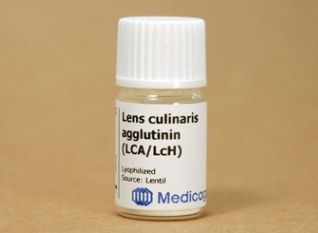
Lens Culinaris Lectin (LCA/LcH) (25 mg)
Medicago AB Products Are Available Worldwide. For Research Use Only. Lens culinaris lectin is isolated from lentil seeds by affinity chromatography. It has 2 subunits and a molecular weight of 46 kDa. The lectin gives two major bands in isoelectrofocusing corresponding to the isomers LCA-A and LCA-B. Lens culinaris is not blood group specific. Its carbohydrate specificity is D-mannose and D-glucose. Adding Mn2+ and Ca2+ to the reconstitution buffer will enhance hemagglutination activity. LCA contains a hemagglutinin A and B mixture that agglutinates human red blood cells but that is not group-specific. Lens culinaris agglutinates a 2% suspension of human erythrocytes at a lectin concentration of 6 g/ml in 0.9% NaCl after 2 hrs at 25C. Adding 60 mM methylmannoside gives an inhibition with a titer that is at least 16-fold lower than the control. LCA/LcH is supplied as a white lyophilized powder from a buffer containing 1 mM CaCl2, 1 mM MnCI2 and 1 mM MgCI2. No preservatives are added. For laboratory use only.
Lens Culinaris Lectin (LCA/LcH) (10 mg)
Medicago AB Products Are Available Worldwide. For Research Use Only. Lens culinaris lectin is isolated from lentil seeds by affinity chromatography. It has 2 subunits and a molecular weight of 46 kDa. The lectin gives two major bands in isoelectrofocusing corresponding to the isomers LCA-A and LCA-B. Lens culinaris is not blood group specific. Its carbohydrate specificity is D-mannose and D-glucose. Adding Mn2+ and Ca2+ to the reconstitution buffer will enhance hemagglutination activity. LCA contains a hemagglutinin A and B mixture that agglutinates human red blood cells but that is not group-specific. Lens culinaris agglutinates a 2% suspension of human erythrocytes at a lectin concentration of 6 g/ml in 0.9% NaCl after 2 hrs at 25C. Adding 60 mM methylmannoside gives an inhibition with a titer that is at least 16-fold lower than the control. LCA/LcH is supplied as a white lyophilized powder from a buffer containing 1 mM CaCl2, 1 mM MnCI2 and 1 mM MgCI2. No preservatives are added. For laboratory use only.
Lens Culinaris Lectin (LCA/LcH) (100 mg)
Medicago AB Products Are Available Worldwide. For Research Use Only. Lens culinaris lectin is isolated from lentil seeds by affinity chromatography. It has 2 subunits and a molecular weight of 46 kDa. The lectin gives two major bands in isoelectrofocusing corresponding to the isomers LCA-A and LCA-B. Lens culinaris is not blood group specific. Its carbohydrate specificity is D-mannose and D-glucose. Adding Mn2+ and Ca2+ to the reconstitution buffer will enhance hemagglutination activity. LCA contains a hemagglutinin A and B mixture that agglutinates human red blood cells but that is not group-specific. Lens culinaris agglutinates a 2% suspension of human erythrocytes at a lectin concentration of 6 g/ml in 0.9% NaCl after 2 hrs at 25C. Adding 60 mM methylmannoside gives an inhibition with a titer that is at least 16-fold lower than the control. LCA/LcH is supplied as a white lyophilized powder from a buffer containing 1 mM CaCl2, 1 mM MnCI2 and 1 mM MgCI2. No preservatives are added. For laboratory use only.
Calmodulin (2.5 mg)
Medicago AB products are available worldwide. For Research Use Only. Calmodulin is a bioactive protein isolated from bovine testes with a molecular weight of 16,7 kDa. The material is derived from cattle born and raised in Sweden, a country where BSE (bovine spongiform encefalopati) is not known to exist. Calmodulin is a calcium-binding protein expressed in many eukaryotic cells. By binding to and regulating various protein targets, it affects cellular processes such as metabolism, nerve growth, apoptosis, inflammation, muscle contraction and memory.
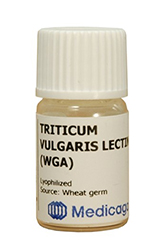
Triticum Vulgaris Lectin (WGA) (10 mg)
Medicago AB Products Are Available Worldwide. For Research Use Only. Wheat germ agglutinin (WGA) is isolated from Triticum vulgaris (Wheat germ) by affinity chromatography. It has two subunits and a molecular weight of 36 kDa. The WGA lectin selectively binds to N-Acetyl glucosamine (GlcNAc) and to N-acetylneuraminic acid (sialic acid) residues of glycoproteins and glycolipids. The lectin agglutinates erythrocytes and most types of malignant cells more readily than the same cells from normal tissues. WGA agglutinates rabbit erythrocytes at < 0.1 g/ml following trypsin treatment of the cells. Adding 300 mM N-Acetyle-D-Glucosamine gives an inhibition with a titer that is at least 8-fold lower than the control. WGA inhibits the C5a receptor interaction, which has implications in studies of receptor micro-heterogeneity and ligand binding sites. WGA and Con A are the two lectins most widely used as analytical and preparative agents when studying glycoproteins and cell surface proteins. The immobilized lectins can be used for affinity chromatography of cells and sub-cellular particles. Triticum vulgaris lectin is supplied as a white to pale-yellow lyophilized powder from 10 mM CH3COONH4. No preservatives are added. For laboratory use only.