

Medicago

Tris Buffer Powder (pH 7.4) (1000 ml) (5 pouches)
Medicago AB Products Are Available Worldwide. For Research Use Only. Tris Buffer Powder is used in many applications within biochemistry and molecular biology laboratories and is a component in TAE and TBE (electrophoresis running buffer). Tris has a slightly alkaline buffering capacity between pH 7.0 and 9.2, which coincides with the typical physiological pH of most living organisms. Tris buffer is a good option for washing procedures in cell culture and is suitable as suspension buffer for biological samples.
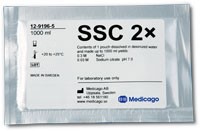
Saline Sodium Citrate (SSC) Buffer 2x Powder (pH 7.0) (1 L) (5 pouches)
Medicago AB Products Are Available Worldwide. For Research Use Only. Saline Sodium Citrate (SSC) specifically developed for Northern and Southern transfer protocols and nucleic acid preparations. Supplied in pouchesin two concentrations (2x and 20x).
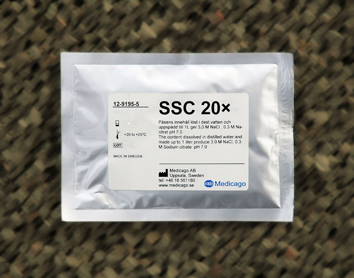
Saline Sodium Citrate (SSC) Buffer 20x Powder (pH 7.0) (1 L) (5 pouches)
Medicago AB Products Are Available Worldwide. For Research Use Only. Saline Sodium Citrate Buffer specifically developed for Northern and Southern transfer protocols and nucleic acid preparations. Supplied in pouchesin two concentrations (2x and 20x).
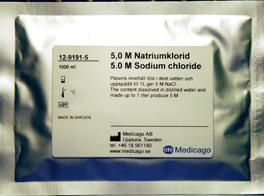
Sodium Chloride (NaCl) Powder (5 M ) (1 L) (5 pouches)
Medicago AB Products Are Available Worldwide. For Research Use Only. Sodium Chloride (NaCI) Powder is usually used in laboratory routines. The product is supplied in convenient exactly pre-weighed tablets and as powder in pouches.
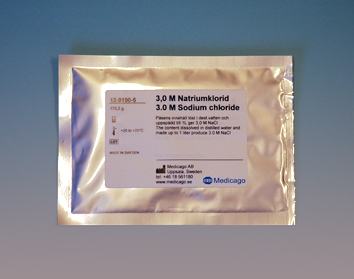
Sodium Chloride (NaCl) Powder (3 M ) (1 L) (5 pouches)
Medicago AB Products Are Available Worldwide. For Research Use Only. Sodium Chloride (NaCI) Powder is usually used in laboratory routines. The product is supplied in convenient exactly pre-weighed tablets and as powder in pouches.
Sodium Acetate Buffer Powder (pH 7.0 ) (1 L) (5 pouches)
Medicago AB Products Are Available Worldwide. For Research Use Only. Sodium Acetate Buffer Powder widely used in molecular biology laboratories for nucleic acid purification.
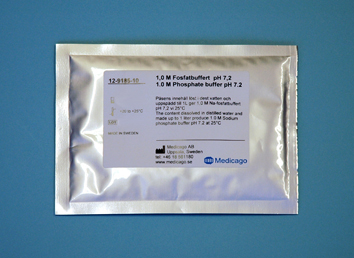
Sodium Phosphate Buffer Powder (pH 7.2 ) (1 L) (10 pouches)
Medicago AB Products Are Available Worldwide. For Research Use Only. Sodium Phosphate Buffer Powder supplied in seven different formulations to suit most biochemical and molecular biology applications.
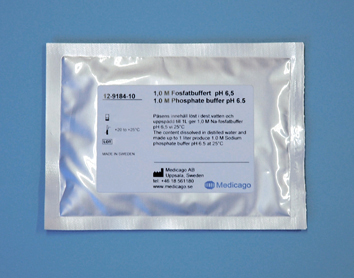
Sodium Phosphate Buffer Powder (pH 6.5) (1 L) (10 pouches)
Medicago AB Products Are Available Worldwide. For Research Use Only. Sodium Phosphate Buffer Powder supplied in seven different formulations to suit most biochemical and molecular biology applications.
Sodium Hydroxide Powder (3 M) (1 L) (5 pouches)
Medicago AB Products Are Available Worldwide. For Research Use Only. Sodium Hydroxide Powder is used in general chemical applications. It is often utilized to raise the pH value of chemical solutions. Medicago’s NaOH is more than 99% pure.
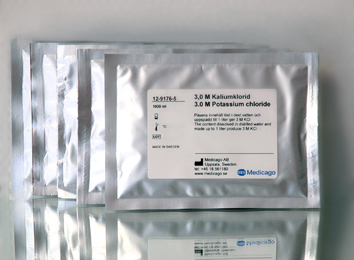
Potassium Chloride Powder (3 M) (1 L) (10 pouches)
Medicago AB Products Are Available Worldwide. For Research Use Only. Potassium Chloride Powder, KCl, is generally used in laboratory routines. Its use as a storage buffer for pH electrodes and as areference solution for conductivity measurements is well established. Supplied as convenient exactly pre-weighed powder in pouches in two formulations: 1 M and 3 M.
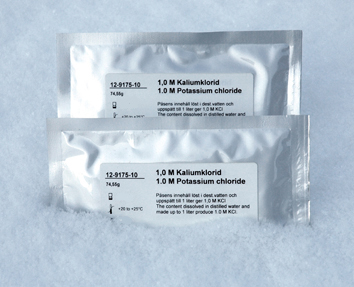
Potassium Chloride Powder (1 M) (1 L) (10 pouches)
Medicago AB Products Are Available Worldwide. For Research Use Only. Potassium Chloride Powder , KCl, is generally used in laboratory routines. Its use as a storage buffer for pH electrodes and as a reference solution for conductivity measurements is well established. Supplied as convenient exactly pre-weighed powder in pouches in two formulations: 1 M and 3 M.
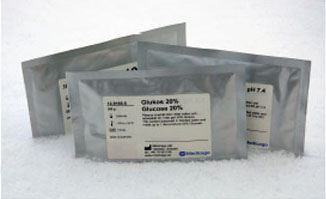
D(+)Glucose 20% Powder (1 L) (5 pouches)
Medicago AB Products Are Available Worldwide. For Research Use Only. D-glucose (D+), also referred to as dextrose monohydrate, is a very important carbohydrate in biology and as an energy source for cultivation of microorganisms. It is biologically active.
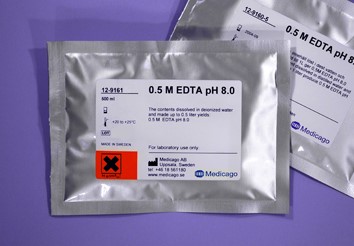
EDTA Buffer Powder (pH 8.0) (500 mL) (5 pouches)
Medicago AB Products Are Available Worldwide. For Research Use Only. EDTA Buffer Powder (ethylene-diamine-tetraacetic acid) is a chelating agent widely used in molecular biology to sequester divalent andtrivalent metal ions such as calcium and magnesium. It can, for example, be added to stored blood as an anti-coagulant to bind Ca2+ ions.
EDTA Buffer Powder (pH 8.0) (1 L) (5 pouches)
Medicago AB Products Are Available Worldwide. For Research Use Only. EDTA Buffer Powder (ethylene-diamine-tetraacetic acid) is a chelating agent widely used in molecular biology to sequester divalent andtrivalent metal ions such as calcium and magnesium. It can, for example, be added to stored blood as an anti-coagulant to bind Ca2+ ions.
Tris-EDTA (TE) 10x Buffer Powder (pH 7.4) (1 L) (10 pouches)
Medicago AB Products Are Available Worldwide. For Research Use Only. Tris-EDTA (TE) 10x Buffer Powder is used to dilute and store nucleic acid samples. Tris-EDTA-based solutions break protein cross-links and can therefore unmask antigens and epitopes in formalin-fixed and paraffin-embedded tissue sections. Treatment with TE Buffer enhances the staining intensity of antibodies in the immuno-histochemical detection of certain proteins.
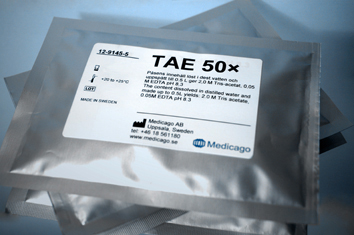
Tris-Acetate-EDTA (TAE) 50x Powder (pH 8.3) (1 L) (5 pouches)
Medicago AB Products Are Available Worldwide. For Research Use Only. Tris-Acetate-EDTA (TAE) is preferably used in electrophoresis because of its high recovery of nucleic acids from agarose gels (compared with TBE). TAE is advantageous for high resolution of long nucleic acid fragments (longer than 1500 bp) on agarose gels. It has a lower buffering capacity than TBE and in general, nucleic acid fragments move slower in TAE gels (apart from linear dsDNA, which tends to run faster). However, gel temperature increases when running a TAE gel for a long time, so the pH might significantly decrease because of the temperature dependency of the Tris pKa. TAE buffer also offers advantages in subsequent enzymatic applications of the DNA sample. For example, if the downstream application is a cloning experiment, the step following agarose gel electrophoresis is ligation to a cloning vector. A DNA sample from TAE buffer is suitable for this purpose, whereas DNA from TBE buffer is not, since TBE inhibits ligases. TAE is also used for native (non-denaturing) RNA analysis and in denaturing gels (instead of MOPS buffer) using prior denaturation of the RNA samples in hot formamide.
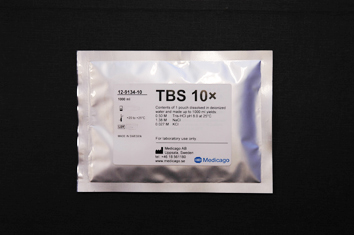
Tris Buffered Saline (TBS) 10x Powder (1 L) (10 pouches)
Medicago AB Products Are Available Worldwide. For Research Use Only. TBS is isotonic and non-toxic to cells and is suitable for molecular biology. The buffer is commonly used as substance diluent or as wash buffer in immunoassays such as ELISA. It is used in immuno-histochemical staining when the background is high and for diluting alkaline phosphatase or peroxidase-conjugated antibodies in Western blotting.
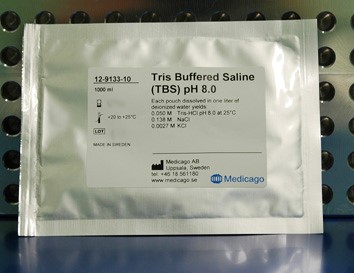
Tris Buffered Saline (TBS) Powder (pH 8.0) (1000 mL) (10 pouches)
Medicago AB Products Are Available Worldwide. For Research Use Only. Tris Buffered Saline (TBS) is isotonic and non-toxic to cells and is suitable for molecular biology. The buffer is commonly used as substance diluent or as wash buffer in immunoassays such as ELISA. It is used in immuno-histochemical staining when the background is high and for diluting alkaline phosphatase or peroxidase-conjugated antibodies in Western blotting.
Tris-Glycine Buffer Powder (pH 8.3) (5 L) (10 pouches)
Medicago AB Products Are Available Worldwide. For Research Use Only. The most common running buffer in native (non-denaturing) homogeneous and gradient polyacrylamide gel electrophoresis (PAGE). Tris-Glycine also has applications in Western blotting. Tris-Glycine gels use a stacking gel to compress the sample into a narrow band before it enters the resolving gel. This leads to much sharper bands than would be seen in gels lacking a stacking gel. Tris-Glycine gels resolve proteins by charge/size. However, very small proteins and peptides do not resolve well due to interference from the glycine/pH discontinuity front. TG buffer is used to make a Tris-glycine/20% methanol Western transfer buffer, which is the most common protein transfer buffer for wet blot transfers. The methanol prevents the gel from swelling during transfer and enhances protein binding to nitrocellulose. Make sufficient transfer buffer to cover the electrode wires in the wet blot transfer unit and to soak the gel, membrane and blotting paper. Protein electrophoresis under denaturing conditions (SDS-PAGE) involves separating proteins based on their size. By treating the sample under denaturing and reducing conditions with sodium dodecyl sulfate (SDS), proteins unfold and become coated with SDS detergent molecules, thereby acquiring a high net negative charge that is proportional to the length of their polypeptide chain. During electrophoresis, the negatively-charged protein molecules migrate towards the positive electrode.
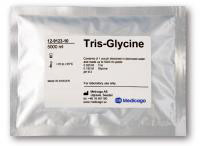
Tris-Glycine Buffer Powder (pH 8.3) (1 L) (10 pouches)
Medicago AB Products Are Available Worldwide. For Research Use Only. The most common running buffer in native (non-denaturing) homogeneous and gradient polyacrylamide gel electrophoresis (PAGE). Tris-Glycine also has applications in Western blotting. Tris-Glycine gels use a stacking gel to compress the sample into a narrow band before it enters the resolving gel. This leads to much sharper bands than would be seen in gels lacking a stacking gel. Tris-Glycine gels resolve proteins by charge/size. However, very small proteins and peptides do not resolve well due to interference from the glycine/pH discontinuity front. TG buffer is used to make a Tris-glycine/20% methanol Western transfer buffer, which is the most common protein transfer buffer for wet blot transfers. The methanol prevents the gel from swelling during transfer and enhances protein binding to nitrocellulose. Make sufficient transfer buffer to cover the electrode wires in the wet blot transfer unit and to soak the gel, membrane and blotting paper. Protein electrophoresis under denaturing conditions (SDS-PAGE) involves separating proteins based on their size. By treating the sample under denaturing and reducing conditions with sodium dodecyl sulfate (SDS), proteins unfold and become coated with SDS detergent molecules, thereby acquiring a high net negative charge that is proportional to the length of their polypeptide chain. During electrophoresis, the negatively-charged protein molecules migrate towards the positive electrode.
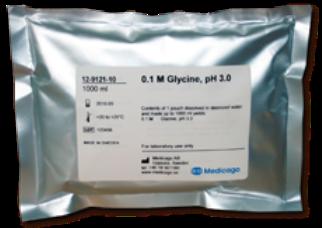
Glycine (0.1 M) (pH 3.0) (1 L) (10 pouches)
Medicago AB Products Are Available Worldwide. For Research Use Only. Glycine-HCI is used as an elution buffer in Protein A chromatography and other types of affinity chromatography. Medicago’s glycine is more than 99% pure.
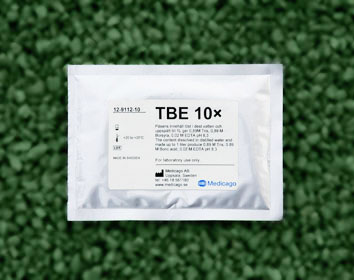
Tris-Borate-EDTA (TBE) Buffer Powder 10x (pH 8.3) (1 L) (10 pouches)
Medicago AB Products Are Available Worldwide. For Research Use Only. In molecular biology, Tris-Borate-EDTA (TBE) Buffer Powder and TAE buffers are often used in procedures involving nucleic acids, the most common being agarose and polyacrylamide gel electrophoresis. Tris-acid solutions are effective buffers for the slightly basic conditions that keep DNA deprotonated and soluble in water. EDTA is a chelating agent for divalent cations, particularly magnesium (Mg2+). As these ions are necessary co-factors for many enzymes, including contaminant nucleases, one task of EDTA is to protect the nucleic acids against enzymatic degradation by nucleases. However, since Mg2+ is also a co-factor for many DNA-modifying enzymes such as restriction enzymes and DNA polymerases, its concentration in TBE or TAE buffers is generally kept low. Borate is a strong inhibitor for many enzymes, which makes its presence in TBE buffer very popular: the DNA sample run in a TBE buffer can better keep its integrity, which suits the purpose of many agarose gel electrophoreses runs, i.e. to analyze the size of DNA fragments. TBE buffer is often used for agarose and polyacrylamide gel electrophoresis when analysing DNA fragments from PCR amplification, DNA isolation protocols, or DNA cloning experiments. It is particularly useful for separating smaller DNA fragments (less than 1500 bp on a 0.8% agarose gel), e.g. small products of restriction enzyme digests. TBE has a greater buffering capacity and will give sharper resolution than TAE. DNA fragments also move faster in TBE than in TAE buffer. However, TBE gels in general afford a poor recovery of nucleic acids compared with TAE gels. TBE also inhibits DNA ligase, which may cause problems if subsequent DNA purification and ligation steps are intended. TBE buffer is supplied in 3 concentrations. Pre-weighed powders give 10x and 5x stock solutions or a 1x working solution.
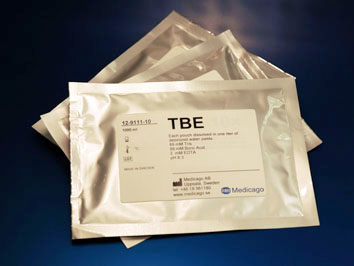
Tris-Borate-EDTA (TBE) Buffer Powder 5x (pH 8.3) (1 L) (10 pouches)
Medicago AB Products Are Available Worldwide. For Research Use Only. In molecular biology, Tris-Borate-EDTA (TBE) Buffer Powder and TAE buffers are often used in procedures involving nucleic acids, the most common being agarose and polyacrylamide gel electrophoresis. Tris-acid solutions are effective buffers for the slightly basic conditions that keep DNA deprotonated and soluble in water. EDTA is a chelating agent for divalent cations, particularly magnesium (Mg2+). As these ions are necessary co-factors for many enzymes, including contaminant nucleases, one task of EDTA is to protect the nucleic acids against enzymatic degradation by nucleases. However, since Mg2+ is also a co-factor for many DNA-modifying enzymes such as restriction enzymes and DNA polymerases, its concentration in TBE or TAE buffers is generally kept low. Borate is a strong inhibitor for many enzymes, which makes its presence in TBE buffer very popular: the DNA sample run in a TBE buffer can better keep its integrity, which suits the purpose of many agarose gel electrophoreses runs, i.e. to analyze the size of DNA fragments. TBE buffer is often used for agarose and polyacrylamide gel electrophoresis when analysing DNA fragments from PCR amplification, DNA isolation protocols, or DNA cloning experiments. It is particularly useful for separating smaller DNA fragments (less than 1500 bp on a 0.8% agarose gel), e.g. small products of restriction enzyme digests. TBE has a greater buffering capacity and will give sharper resolution than TAE. DNA fragments also move faster in TBE than in TAE buffer. However, TBE gels in general afford a poor recovery of nucleic acids compared with TAE gels. TBE also inhibits DNA ligase, which may cause problems if subsequent DNA purification and ligation steps are intended. TBE buffer is supplied in 3 concentrations. Pre-weighed powders give 10x and 5x stock solutions or a 1x working solution.
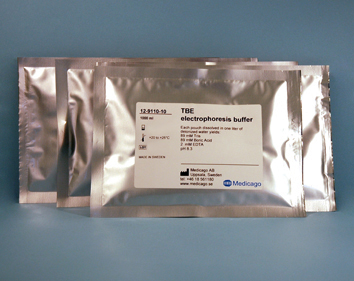
Tris-Borate-EDTA (TBE) Buffer Powder 1x (pH 8.3) (1 L) (10 pouches)
Medicago AB Products Are Available Worldwide. For Research Use Only. In molecular biology, Tris-Borate-EDTA (TBE) Buffer Powder and TAE buffers are often used in procedures involving nucleic acids, the most common being agarose and polyacrylamide gel electrophoresis. Tris-acid solutions are effective buffers for the slightly basic conditions that keep DNA deprotonated and soluble in water. EDTA is a chelating agent for divalent cations, particularly magnesium (Mg2+). As these ions are necessary co-factors for many enzymes, including contaminant nucleases, one task of EDTA is to protect the nucleic acids against enzymatic degradation by nucleases. However, since Mg2+ is also a co-factor for many DNA-modifying enzymes such as restriction enzymes and DNA polymerases, its concentration in TBE or TAE buffers is generally kept low. Borate is a strong inhibitor for many enzymes, which makes its presence in TBE buffer very popular: the DNA sample run in a TBE buffer can better keep its integrity, which suits the purpose of many agarose gel electrophoreses runs, i.e. to analyze the size of DNA fragments. TBE buffer is often used for agarose and polyacrylamide gel electrophoresis when analysing DNA fragments from PCR amplification, DNA isolation protocols, or DNA cloning experiments. It is particularly useful for separating smaller DNA fragments (less than 1500 bp on a 0.8% agarose gel), e.g. small products of restriction enzyme digests. TBE has a greater buffering capacity and will give sharper resolution than TAE. DNA fragments also move faster in TBE than in TAE buffer. However, TBE gels in general afford a poor recovery of nucleic acids compared with TAE gels. TBE also inhibits DNA ligase, which may cause problems if subsequent DNA purification and ligation steps are intended. TBE buffer is supplied in 3 concentrations. Pre-weighed powders give 10x and 5x stock solutions or a 1x working solution.
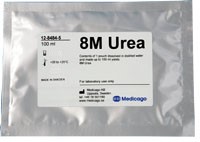
Urea (Carbamide) (8 M) (100 mL) (5 pouches)
Medicago AB Products Are Available Worldwide. For Research Use Only. Urea (carbamide) is an organic compound with the chemical formula (NH2)2CO extensively used in proteomics and molecular biology. The urea supplied by Medicago is more than 99% pure.
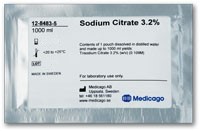
Buffered Sodium Citrate 3.2% (0.109 M) (1 L) (5 pouches)
Medicago AB Products Are Available Worldwide. For Research Use Only. Used in clinical laboratories and blood banks as an effective anti-coagulant, usually in a ratio of 1:9 sodium citrate/blood.The citrate ion chelates calcium ions in the blood by forming calcium citrate complexes and disrupting the blood clotting mechanism.
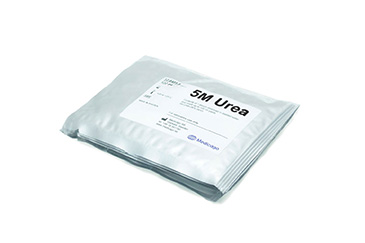
Urea (Carbamide) (5 M) (100 mL) (5 pouches)
Medicago AB Products Are Available Worldwide. For Research Use Only. Urea (carbamide) is an organic compound with the chemical formula (NH2)2CO extensively used in proteomics and molecular biology. The urea supplied by Medicago is more than 99% pure.
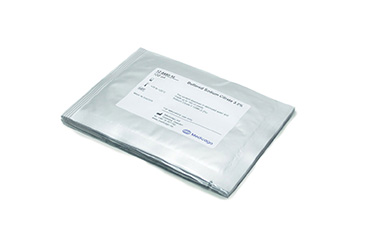
Buffered Sodium Citrate 3.2% (0.109 M) (100 mL) (10 pouches)
Medicago AB Products Are Available Worldwide. For Research Use Only. Used in clinical laboratories and blood banks as an effective anti-coagulant, usually in a ratio of 1:9 sodium citrate/blood.The citrate ion chelates calcium ions in the blood by forming calcium citrate complexes and disrupting the blood clotting mechanism.
USP-EP Anti-FXa and Anti-Flla Assay for LMWH Buffer with BSA (pH 7.4) (1 L) (1 pouch)
Medicago AB Products Are Available Worldwide. For Laboratory Use Only. Pre-weighed powder mix in sealed pouch (Store at 2 – 8C). The contents of 1 pouch dissolved in 1 L of deionized water yields:0.050 M Tris Buffer pH 7.4 @ 25C,0.150 M NaCI,1.0% (w/v) BSA (bovine serum albumin).For use as dilution buffer for AT, FXa and thrombin in USP method for Anti-FXa and Anti-FIIa activity assays for Low Molecular Weight Heparin (LMWH). For use as dilution buffer for standards, samples, AT, FXa, thrombin, and blank in EP method for Anti-FXa and Anti-FIIa activity assays for Low Molecular Weight Heparin (LMWH). USP = United States Pharmacopeia.EP = European Pharmacopoeia.
USP-EP Anti-FXa and Anti-Flla Assay for LMWH Buffer (pH 8.4) (500 mL) (1 pouch)
Medicago AB Products Are Available Worldwide. For Laboratory Use Only. Pre-weighed powder mix in sealed pouch (Store at 20-25C). The contents of 1 pouch dissolved in 500 mL of deionized water yields:0.050 M Tris Buffer pH 8.4 @ 25C,0.175 M NaCI 0.0075 M EDTA.For use as dilution buffer for substrate in USP and EP methods for Anti-FXa and Anti-FIIa activity assays for Low Molecular Weight Heparin (LMWH). USP = United States Pharmacopeia.EP = European Pharmacopoeia.